Review: Zone3 Activate Trisuit

Zone3 Activiate products can be found on Amazon

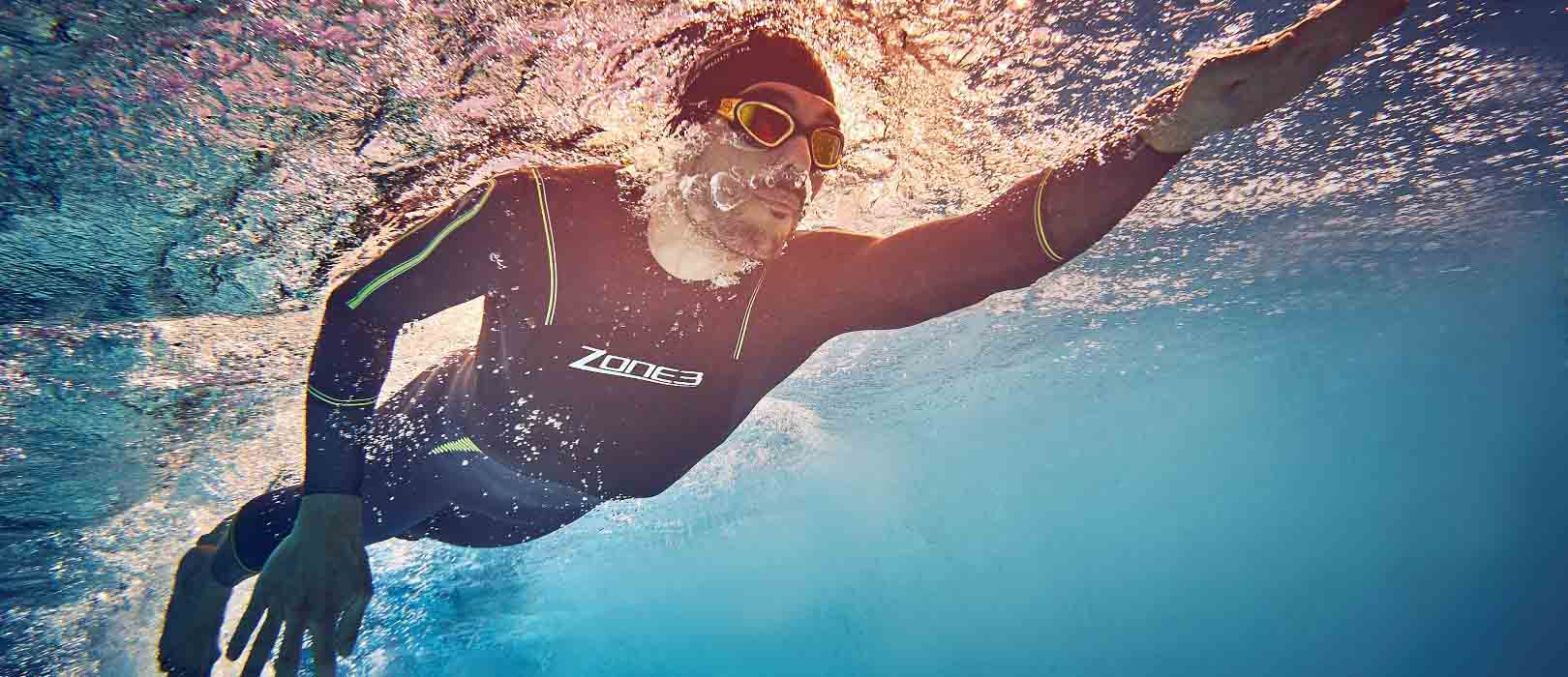
I have been using the Zone3 Activate trisuit (mens) for a little while and thought it deserved a review. Zone3 seems to have captured the market that sits between entry level and mid level with this particular suit.  It is definitely a price that suggests entry level at circa £59 but it out performs other suits in the price range.  Zone3 have designed the Activate for beginner triathletes or for those looking for a great value suit to train with. I will admit I found it more than adequate to race in (up to 70.3), and I wouldn’t be described as a beginner.

The trisuit has flatlock seams and smooth material that make it comfortable and supportive for training and racing. I am slim, 5’10” and the suit is a decent fit on me, although I would like it tighter.  Unfortunately if I had gone smaller I wouldn’t have had the length.

The Activate range is made using a Lycra sport fabric to ensure breathability, comfort and performance.  I did feel the fabric soaked up more water than some of my more expensive suits, but it did dried quickly enough once out the water and on the bike. The tripad is a race-specific designed tri pad which falls into the bracket of ‘not too big and not too small’.   Because it is a tri pad this minimises water absorption on the swim and doesn’t impede your swim or run.  On the bike it gives adequate comfort considering its minimal design.

A 1/4 front zipper gives the option for ventilation during the cycle or run with a small pocket for all your triathlon wares. The legs have silicon grippers to prevent the suit riding up and to stop rubbing which would jeopardise performance.

Verdict

For the money, this is a great trisuit that like the Zone3 Advance wetsuit, punches above its weight in the performance stakes. I did think it took on more water during the swim than other suits, but still out performs others in its price range.  As mentioned earlier in the review, if you are new to triathlon or on a budget and want to race in a trisuit, this is a great option!

Fit 3.5/5  –  Performance 3.5/5   –  Value 4/5  –   Overall 4/5

Zone3 Activiate products can be found on Amazon

Blog: No rest for the wicked (or injured)

Readers of the last instalment of my blog will know that injury has struck and I have a bad dose of plantar fasciitis. I have mixed feelings about this because on the one hand I will be deferring my marathon place at the Long Course Weekend in Tenby.  However, on the flip side it’s my stag party this weekend, and now I suppose I can relax rather than having a marathon looming over me.

This brings me to the topic of enforced rest, or what I prefer to call enforced recovery. In the life of a triathlete, we very rarely take 100% rest (where we stop training all together), however there is probably some method in our madness.

In the dark old days of sports medicine the advice was simple, if it hurts, stop. This never sat well with athletes (particularly those who compete in triathlon) because it was felt people drop back in their training plans.  Thankfully the science now suggests that appropriate active recovery can be more beneficial than complete rest, preventing the potential loss of cardio conditioning and muscle strength.  Now, I’m not talking about having a week or two off because of a twisted ankle, I am referring to mid to longer term injuries, but please always seek professional advice on these matters.

I suppose the benefit (or curse whichever way you look at it) of having 3 disciplines to train for, is that unless you have a catastrophic injury, you can always do some form of training. Whether it is core training for a back injury, or a swimming workout for leg injury, your training can always be adapted to ensure you maintain fitness. Speaking to triathletes during race seasons, most will tell you of injury niggles, which considering the level of training we do, are inevitable.  The average triathlete when faced with a minor injury, will automatically be thinking about ways to work around the injury, even if that means changing running style or increasing the use of the RICE method.

The management of these niggles is important but identifying the reasons for these injuries is even more imperative. A few years ago I used to pull my calf constantly until I realised it was the muscles in my lower back pulling me out of alignment.  Since then, I lengthen and strengthen these muscles and have not any issues to date.

In 2017, I am taking a season off from long distance triathlon and concentrating on my running, which has meant pounding the streets more than normal. I have been suffering from what I believe is plantar fasciitis for a few weeks (actually months), but I was silly to think that ice alone was enough to resolve the issue.  What I should have done was to look for the injury cause;

  • Is it my shoes? (possibly)
  • Am I stretching enough? (probably not)
  • Is it my routes? And did I jump up the distance too quickly? (possibly)
  • Should I allow more recovery time for my heel between runs? (yes, definitely)

My first mistake was not listening to my body from the start of the injury. Two things happened; firstly I was losing pace for no particular reason, then I was getting a sore and tight heel in the mornings (both which I believe were due to inconsistent training). I haven’t been sticking to a routine of my normal Tuesday/Thursday/Saturday runs, which meant my body didn’t have time to recover in some instances, and then at other times I would just do a huge run with hardly any running around it.At the first sight of injury I should have taken time off to recover, switching over to less impactful training like cycling or swimming, or even switching the surface I ran on.I should have researched my symptoms and sought recommended treatment thus preventing further injury. However, I can be really stubborn when listening to advice on injury even though I have a sports degree background, and knowledgeable on the subject.At this point when understanding the injury you can experiment what treatments work for you. You will often hear me say that triathlon is very unique to the individual; you have to find your own plan (fitting in around lifestyle and preferences). Finally once you know what works for you, you can devise an injury schedule and protocol that will allow you to treat your injury in the correct manner, and potentially still maintain a level of training.For the time being though, I will be enjoying my stag party where I can let my hair down and not worry about going out for a run between beer sessions.I don’t think my friends would allow that anyway……………..

Review: Zone3 Advance Wetsuit

Zone3 Advance can be produced from Amazon

I often say to people who are new to triathlon that they should consider borrowing equipment, or buying it second hand, simply because how will they know they will enjoy it? If you find that triathlon isn’t for you at the first attempt, you will be left with expensive items that just gather dust.  When I started triathlon in 2013 I bought most equipment I needed second hand which served me well for the first couple of years.  However, after a few races I was ready to upgrade.  First port of call was a new bike quickly followed by a new wetsuit.  My first wetsuit was by 2XU and one of their entry level suits purchased from eBay for £50.  To be fair it was an excellent suit that fitted well and allowed me to glide through the water with the right level of buoyancy.

However, as the 2XU suit was a few years old I was ready to purchase a new suit that would be the next step up in performance. I knew the top end suits would be out of my price range because I wanted to spend circa £200, so I started researching the mid entry suits, examining the usual brands of 2XU, Blueseventy, HUUB and so on.  While I was undertaking this research I came across an article from 220 triathlon magazine which examined the entry, mid and top level suits, and Zone3’s Advance (2016) favoured well despite being classed as an entry level wetsuit (RRP £159.99).

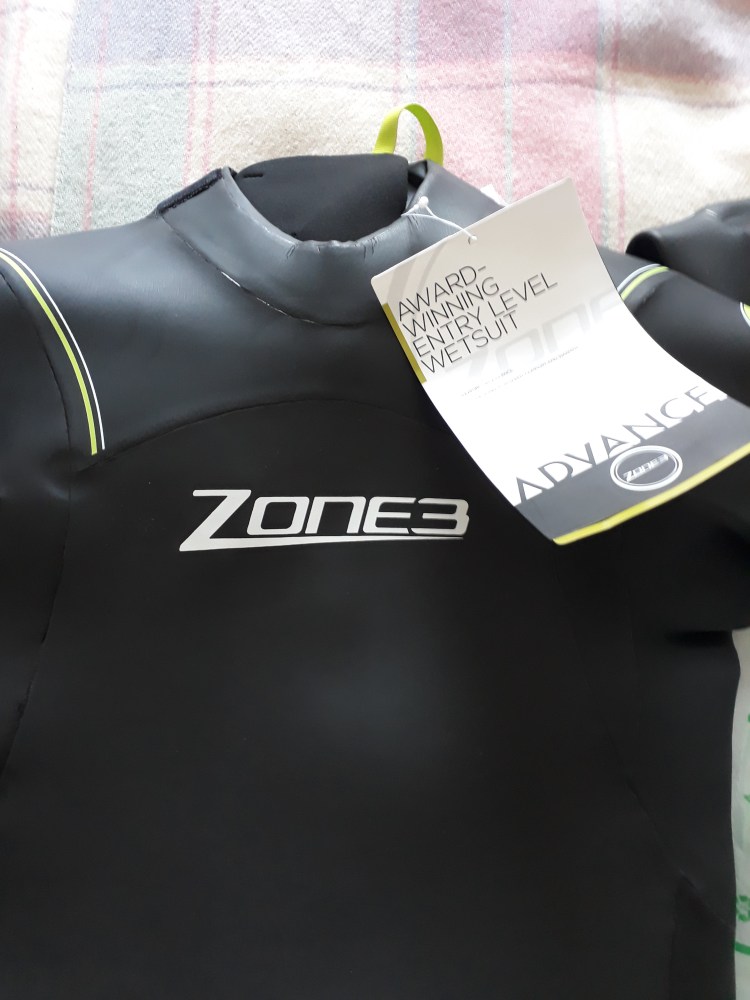
I already owned a Zone3 trisuit and although the fit isn’t perfect, the actual quality of the item was very good. I expected the Advance wetsuit to be similar; well constructed and affordable.  When I received the wetsuit I was really impressed with the quality of the item which has a combination of 70% Speedflo neoprene and 30% smooth-skin rubber. While the Advance isn’t as supple as some £400-plus suits, it wouldn’t feel out of place against many mid-range products costing twice the price. According to Zone3, they have added new “Extreme Flex Materials” to the underarms, increasing stroke efficiency by improving flexibility.  I did seem to have a greater range of moment with this suit, compared to my last, and I did feel slicker through the water.   I will admit though that I am on my second Advance suit because the first had a fault with the fabric in the underarm area, but customer service at Zone3 was excellent, and a new suit (from a different batch) sent out to me.

There is a coated section (known as Pro-speed Cuffs) at each of the wrists and ankles, which aids removal of the suit, always handy in transition. The neck is lower than my old 2XU wetsuit but I still had a small amount of chafing. However, I get this with most wetsuits.  Nothing an application of Body Glide won’t solve!

The design of the main body of the suit is unfussy and smooth, probably to aid glide, and was a pleasure to swim in. The buoyancy was well balanced especially around the torso and hips, positioning them higher for an optimal swimming position. Core support buoyancy panels help make swimming feel more effortless because of this improved position. The suits thickness is 2mm around the shoulders and arms, 3mm on the chest and upper back, 4mm on the torso, legs and side panels. This will ensure warmth but you won’t bake from the inside out.

Verdict

All the research I had read prior to purchase indicated the Advance wetsuit is recognised as the best entry level suit on the market, and I will admit that Zone3 have done a cracking job with this wetsuit. Despite being on the more affordable end of the pricing scale, it punches above its weight rivalling more expensive suits.  The Advance has a good fit with lower neckline and is one of the most comfortable entry level wetsuits I have tried.

The Advance is the perfect suit for anybody just starting out in triathlon because I guarantee you won’t feel the need to upgrade for a while.

Performance 4/5 Value 5/5 Overall 4/5

Zone3 Advance can be produced from Amazon

20170614_091505.jpg

Review: Whitworths Shots (a complement to gels)

Whitworth products can be produced on Amazon

How a triathlete fuels during endurance events is vital to how they perform on the day. Often terms like ‘bonking’ or ‘hitting the wall’ are used to describe depleted energy levels, affecting an athlete’s ability to maintain performance.

Endurance athletes will spend months training for long distance events with a performance goal in mind. For me, when training for a long distance event like Ironman, I will often practice and test out fuelling strategies during my training.  This often involves testing new products (shop bought and home-made) and examining how different products work together.

For regular readers of my blogs and reviews, you will know I promote eating as naturally as possible but I realise that the convenience of using gels, bars and powders is appealing. I use a variety of products when training and racing, and do prefer a mixture of liquid and solid food.

During this review I will examine a product not usually associated with sports nutrition, to see whether it has a place in my fuelling strategies of the future.  I will be testing Whitworths Shots.

Whitworths are more commonly recognized for their dried fruit, nuts and seeds, and although I have used their products previously, it has been more for baking than triathlon. In the supermarket recently I came across Whitworths Shots which are small handy sized packets (similar in size to a gel), and thought they would be convenient for training.  I will often crave something solid when out on a long bike ride because I get sick of just fluid and gels, so these Shots are worth testing.

The Shots come in 9 different flavours but I have only tried the 4 available in my local Asda supermarket. I tried the following flavours:

Predominately the Shots have been marketed at the weight loss market but given their mainly natural ingredients (minus small pieces of chocolate, toffee and biscuit), I think they are perfect fuel to complement more sophisticated energy products. The carbohydrate content in each pack is decent depending on what flavours you chose. The table below gives the nutritional value of each of the 4 flavours I tested against a standard SIS energy gel.

Toffee & Pecan Raisin & Choc Berry & W/choc Fruity Biscuit SIS Gel
Calories 99 kcal 91 kcal 93 kcal 93 kcal 87 kcal
Carbs 14.9g 15.8g 17.7g 17.3g 22g
Of which sugars 12.6g 12.6g 13.5g 12.1g 0.7g
Protein 1.1g 1.0g 0.7g 0.7g 0.0g
Fat 3.7g 2.3g 1.9g 1.1g 0.0g

Verdict

I really like these Shots. Now I am not suggesting you replace your gels with them, although they do cost less than a standard gel (I paid £0.50 per pack).  However I do feel there is a place for them within my fuelling strategies.  I can see me taking one or two of these on a long bike ride to take in-between gels, adding texture and crunch to what I am consuming.  The packets are just as easy to open as a gel, and the flavours are natural and tasty.  I would probably struggle to eat these on a run without stopping but I will definitely be buying them again for long bike rides.

Whitworth products can be produced on Amazon

IMG_4955

Review: Whole Earth Power Balls (a natural solution to gels etc)

Last week I ran Man V Horse in Llanwrtyd Wells (Mid Wales) which is organised by Green Events. For those who haven’t heard about this race before, it is literally a 22/23 mile race over the local mountainous terrain against horses (with riders). The race can be undertaken as a solo run or in a 3 person relay. The event has been going since…….. and is one of a series of crazy events organised by the local people, including the world bog snorkelling championships.

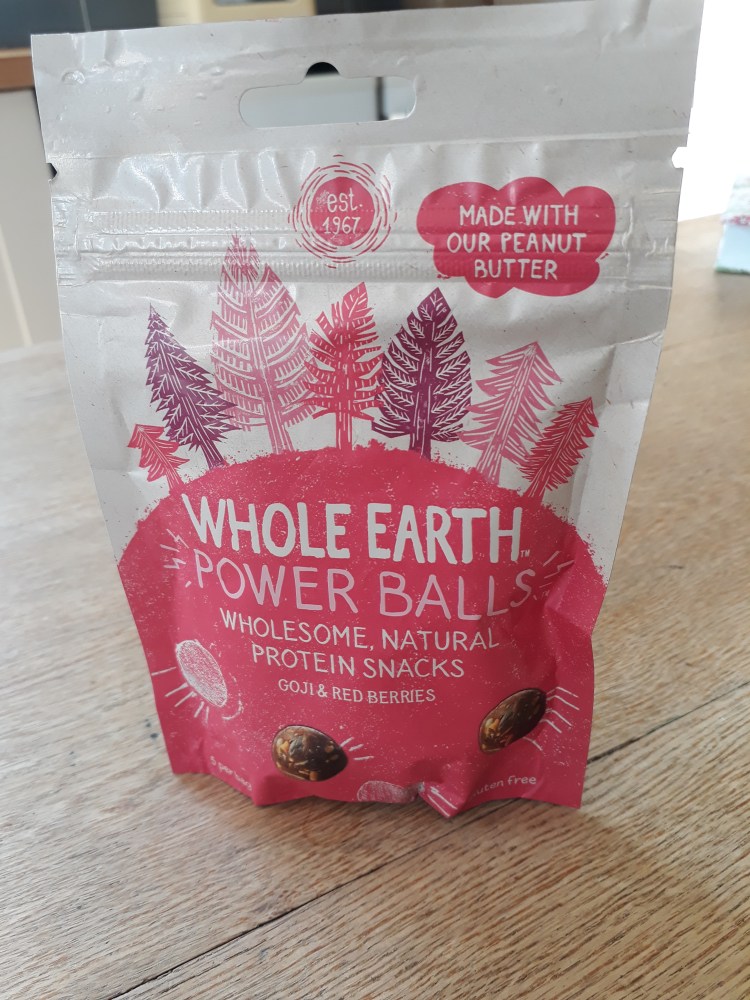
One of the event’s main sponsors over the last few years is Whole Earth, who are known for their peanut butter using ‘wholesome natural ingredients’. At this year’s event, Whole Earth were giving away their relatively new Power Balls snacks, which I have since found out are endorsed by the British Triathlon Federation. The Power Balls have been created to “energise and fuel consumers through a busy day or active workout” (Whole Earth).

The Power Balls are available in four flavours:

  • classic peanut butter
  • coconut
  • pumpkin chia & flax seed
  • goji & red berries

The Power Balls are protein snacks based around the brand’s peanut butter and contain natural ingredients including peanut butter, gluten-free oats, roasted peanuts and dried fruit, and nothing at all artificial. The Power Balls come in a re-sealable pack with five balls in each, and recommended to be sold at £1.99.

Nutritional Information (per ball) – 38 kcal / 1.3g fat (0.2g saturates) / 5.0g carbs (sugars 4.5g) / Protein 1.4g


I did find the Power Balls quite dry when trying them, so it would be advisable to ensure you consume with water or some other drink. Yes, beer counts as well. Once you get past the dryness, they are quite tasty. However I only tested the pumpkin, chia & flax seed and the goji & red berries variants, where the seeds and freeze dried fruit probably contributed to the dry texture.

The only issue I see with the Power Balls is what you actually use them for. Is it for energy during training/races? f so, the carb content (25g per pack) against cost is lower compared to other products on the market (Clif Shots are 48g carb per pack). If it is for recovery after training, the protein content is pretty low compared (7g per pack) to other products on the market or other more natural products.

However, I do believe there is a place for these Power Balls in a triathlete’s diet and fuelling strategy, especially if you are concerned about eating as clean as possible.

Verdict

Normally I am a huge fan of making my own snacks including protein rich oat balls, but for those who don’t have the time or the inclination to make their own, these Power Balls would be an option for recovery and as part of a fuelling strategy. I like to use a number of different products when on long bike rides/runs, and will definitely look to use these on the bike, especially since they come in a sealable pouch.

I would suggest trying these at least once, they are a handy little pack if you want a quick energy fix, and are concerned if your ingredients are natural.

Whole Earth Power Balls can be purchased from Amazon

20170614_102502

Review: Energy Sweets (an alterative to gels)

I have used various fueling techniques over the years but it is often difficult to find out what works for you as everyone is unique. Energy gels, solid bars and soluble powders don’t always agree with everyone, with some people feeling nauseous or worse, making you rush for the nearest toilet or bush. While some people simply just hate that sickly sweet taste!

While many athletes can happily use gels to keep their carb stores topped up during endurance training and races, there are some who just don’t get on with them and often seek out alternative options.

I am no expert in sports nutrition but much of the research will tell you that you need to consume around 60g of carbohydrate per hour to optimise your race performance. Athletes have a limited capacity to store carbohydrate as glycogen in our muscles, which is converted into glucose and fuels your muscles. Typically, it is advised that extra carbohydrate is required during races lasting more than 90 minutes preventing you from ‘bonking’ or ‘hitting the wall’.

The alternative to gels can be varied but this review will examine energy sweets/chews which can offer something different. Energy sweets make it easy to monitor your carb intake whilst being really tasty. They don’t take as much chewing as a bar, but are far less effort to take in than a gel, plus you avoid getting sticky hands.  This review will look at 4 of the leading brands in the UK;


Jelly Belly Sport Beans RRP £1.99

Jelly beans wouldn’t be my normal ‘go to’ for an energy fix but Jelly Belly’s Sport Beans are a convenient option to consider. They come in a small bag which contains circa 13 beans (28g) and can easily be stored in a pocket or sports bra (so I am told).  The only downside for me is that they don’t fit into a race belt (unless it has a pocket) which is my preferred storage for race day.  The pack is easy enough to open on the move but once open it can’t be resealed.  Although wee in stature the jelly beans do contain a small amount of electrolytes, with some flavours containing caffeine for that extra energy boost.

Each pack of Sport Beans contains 25g carbs, of which 76 per cent are sugars, making them ideal portable carbs to aid in maintaining blood sugar levels and allowing longer exercise. A good thing about the beans is that there’s no artificial sweeteners, however they contain some E numbers which I would prefer to avoid where possible.  Each pack is designed to give you roughly an hour’s worth of energy but it doesn’t feel substantial enough for me.


Nutrition score per serving (13 beans): 100 calories, 25g carbs, 80mg sodium, 40mg potassium 50mg caffeine

Score 3/5


GU Energy Chews RRP £2.99

GU Energy Chews are fundamentally the sweet/candy equivalent of GU’s well-recognised Energy Gels. Some people really don’t get on with GU’s energy gels because of their thick consistency but I have always enjoyed GU’s flavours. These semi-solid sweets are easy to chew on the move and the package is easy to open.  Again like the Sport Beans, once the package is open, there is no easy way to reseal them, although now come a pack similar to Clif Bloks (see next article).

The fuel comes courtesy of a combination of cane sugar, tapioca syrup and maltodextrin which is common in most products across the energy gel/sweet market. The combined carb source provides a fairly flat delivery of energy without any noticeable crash, with the advice during sustained exercise, being to consume a 30g sachet (4 chews) every 45minutes.

You’ll find 50mg of sodium per 30g of chews and 40mg potassium across the GU Energy Chew options; these additions are designed to help balance body salts lost through sweat. Ideally of course you might look to replace a wider spectrum of lost salts, but as sodium and potassium are the primary losses these are a solid place to start.

Flavours are varied and one of GU’s secret weapons. These include Strawberry, Orange, Blueberry & Pomegranate, Watermelon, Raspberry and the weird but actually tasty Salted Caramel Apple. Caffeine options are available in the Strawberry (20mg), Salted Caramel Apple (20mg) and Raspberry (40mg).


Nutrition score per serving (30g pack): 90kcal with 23g of carbs (11g of which are sugars)

Score 4/5


CLIF BLOKS RRP £2.50

Clif have a solid pedigree in the sports energy market and their Clif Bloks (formally Shot Bloks) are well established as an alternative to gels. Each pack has 6 ‘cubes’/bloks which have a soft consistency but firm to the touch (like a wine gum that’s been in a hot car).  This ensures that chewing and digestion is easy on the move.

Each blok is 33 calories making it easy to track caloric and electrolyte (50mg of sodium and 20mg of potassium) intake during long outings and races. Some flavours offer increased caffeine content with 25 or 50mg per serving.  The carb hit is big for half a pack (24g) which keeps you going through long runs and rides. The good thing is that each blok contains mainly natural ingredients which should help keep your tummy happy.

They come in small packs, similar in size and shape to an energy gel or chocolate bar which can be easily attached to a race belt (see my comment above) until you get to the last couple. My top tip is to cut open the top before you start so it is easy to push the blok out

Flavours include Black Cherry, Citrus, Cran-Razz, Margarita, Tropical Punch, Strawberry, Orange, Mountain Berry

Nutrition score per serving (3 pieces ½ pack): 100 calories, 24g carbs (12g sugars), 70mg sodium, 20mg potassium

Score 4.5/5


Powerbar Powergel Shots £1.99

PowerBar is a long-standing sports nutrition brand, partnering with Ironman so is familiar within the world of triathlon. Often many triathletes will test Powerbar products in training so they aren’t caught out on race day when reaching for a complimentary gel.  Their product range is varied and does include their Powergel Shots. These sweets are similar in consistency to Clif Bloks and GU’s Chews so they are easily chewed and swallowed.  You get nine in a pack although actually getting them out of the packet can be fiddly on the move, and the packet can’t be resealed afterwards.  What I like about these shots over the others tested is the liquid centre which added a different texture to the experience.

The main ingredients include glucose syrup, sugar and water which come in two flavours (orange, and cola which contains caffeine).

A packet will contain nine Shots weighing in 60g, so a little over 6g per Shot, and provides just over 200kcal in the form of 48g of carb and 4g of protein. There’s also a dash of fat and salt for good measure.

I am a fan of these shots, especially the liquid centre. It is a shame that more flavours aren’t available and they generally tend to be less available in my local supermarket/supplement shop.

Nutrition score per serving (60g pack): 210 calories, 48g carbs (36g sugars), 0.1g salt, 75mg caffeine

Score 4/5


Verdict

Energy sweets are generally more expensive when compared on a blunt carbs-per-quid basis against a single gel. However, if you struggle to take in gels on the move, then energy sweets may be an option for you.  I would happily use all four sweets reviewed but personally I am a huge fan of Clif’s Bloks because they fit neatly onto a race belt, and are available in my local supermarket (Tesco).  I also found the Powerbar Powergel Shots easy to consume and I’m a fan of the liquid centre (sorry to go on about this).

I regularly use energy sweets but normally in fuelling strategies that include a mixture of gels, sweets and bananas. As I always write in my blogs/reviews, triathlon can be very individual so please ensure you test any new product or fuelling strategy during training, not during races.

Hope this review helps.

Review: Garmin Forerunner 910XT and 920XT compared

When I starting training for Ironman Wales in 2013/14, I did a little bit of running and had experience of using GPS watches to clock my time, distance, HR etc. I knew I would need a a bit of an upgrade to a multi sport watch for Ironman, and after much review and consideration I opted for the Garmin 910XT.

The 910XT was a godsend allowing me to pace myself and undertake HR zone training. Although chunkier than the previous watches I had used, I quickly got used to its size, and loved how simple it was to switch between disciplines during brick sessions. The Forerunner 910XT was built as a triathlon watch and its features demonstrated that. The swimming functions gave me the ability to monitor not only outdoor swims via GPS, but also my indoor swims using its built in accelerometers. I had an easy quick release mount for the bike, which meant I didn’t need to buy an additional bike computer.

However, I finally got my hands on a 920XT recently which gave me the opportunity to compare the 910XT and 920XT, and as expected (given the advancement in technology) there are some differences between the watches.

In short, the 920XT is the evolved version of the 910XT with more support for swimming drills, enhanced running options and enhanced connectivity to our wider digital world.   With WiFi, Bluetooth & ANT+ options to connect to the internet/your phone/watch or computer it makes synchronising a whole lot easier.  I have always found uploading 910XT activities quite a laborious task because I can never find my ANT+ stick, so I’m really pleased with this upgrade.

Upgrades

Garmin have taken the small irritations of the 910XT, fixed them, and created a really good triathlon aid in the 920XT. Swimming-wise, the 920XT has better support for drills, with a new function for rest planning and the watch has the ability to tell you when you have to push off again.

Not a lot has changed cycling-wise, with some improvements in sensor options but Bluetooth is still only used for synchronisation. Cadence sensors, heart rate straps and power meters are still connected via ANT+.

When combined with its new HRM strap, the 920XT vastly improves running metrics with support for vertical oscillation, ground contact time, cadence and an integrated metronome. And if you want, it can even calculate your Vo2 Max!!

Software

There is a change in software and a move away from the menus used on the 910XT and the 310XT before it. The new menus are really easy to navigate so the change isn’t too painful.  My biggest headache with the 910XT was that it couldn’t be used as a watch, however I’m glad to report this has been rectified and once the power save mode kicks in a watch function is displayed. The 920XT is also reported to locate satellites quicker, reducing the time you are standing in the rain waving your hand in the arm.

Dimensions

The 920XT is lighter than the 910XT with a difference of 11 grams (61 & 72 grams respectively), which makes it less cumbersome to wear all day as a watch.  While 11 grams may not sound like a lot, you can really feel the difference. The 920XT is slimmer and the wrist strap is more pliable resulting in a more comfortable fit. The quick release system is still available for the 920XT with a set of 3 bracket/mount options for; 1) the watch 2) the strap and 3) the bike.

Battery

The 910XT had an impressive 20hrs battery life but the 920XT goes further with 24hrs in standard mode. The 920XT is said to be smarter in how it works because GPS is enabled and disabled automatically when you select a sport. If the watch is left idle it will jump to watch mode and lock itself, in this mode the battery should last up to four months. For those expecting their watches to die after one day, this is impressive!

Verdict

The upgrades on the 920XT solve most of the gripes I had about the 910XT ensuring this Garmin product range holds on to top position in the Triathlon market. The watch is not cheap with prices around £300 (£340 with a HRM) but I would recommend this to anyone who is in triathlon for the long haul.  The connectivity of this watch which links to your phone, ensures Strava or Training Peaks is updated in an instant- if that is important to you….upgrade now.  For the more budget conscious triathlete or those new to the sport, the 910XT is still a fantastic option for your training, whether you can get a reduced new version or a second hand model.  My 910XT is 5 years olds (I bought second hand) and still going strong but after reviewing the 920XT I am tempted to upgrade.

Hope this review helps. These watches can be bought on Amazon/Wiggle via this these links

Garmin 920XT on Amazon

Garmin 920xt with HRM on Amazon

Blog: 3 weeks before marathon – Plantar Fasciitis strikes

At the beginning of July, Tenby (South West Wales) plays host to the Long Course Weekend which sees the 3 iron distance disciplines split over a weekend. On Friday night, athletes will undertake the 2.4 mile swim in Tenby’s North Beach , a 112 mile tour of Pembroke on the Saturday, and a marathon (plus shorter distance option) on the Sunday.  This event is normally used as a pre cursor to Ironman Wales which is held a couple of months later.

This year I have signed up for just the marathon on the Sunday, since I was concentrating more on my running in 2017. My training has been a bit ‘stop start’ as I have struggled getting into a regular routine and training, for no reason other than a lack of motivation and focus.  I have been getting in the long runs, but it has been the regular shorter runs I have often missed, which has really affected my ability to maintain regular pace over a longer distance.  I have always found that when my two weekly shorter runs (5/6miles) are consistent, my longer runs are so much more comfortable.

This week, 3 weeks before the marathon, I planned to do my last long run of 20/22 miles and signing off a very unsatisfying training period. However, 15 miles into the run I was calling a taxi as I could barely put my heel to the floor.  It seems plantar fasciitis has struck………..

I will admit that I have been battling the dreaded sore heel syndrome for a few weeks, and had just been managing it until after the marathon. I have been waking up with a sore heel most mornings but have been able to stretch it out to a certain degree.  However, as things stand it is looking likely that I will be deferring my marathon place (if I can) because the condition has deteriorated and treatment needs to start now.  First port of call is diagnosis from a professional.

For those of you who don’t know what it is, I will try to give my limited knowledge (supported by some medical information from the internet). “The plantar tendon keeps the arch of the foot from flattening completely when the foot bears weight, thus providing cushioning and shock absorption when you’re walking, running or standing” (Active.com). This tendon also allows you to point your toes. Plantar fasciitis is a condition that inflames this tendon and can be quite common amongst athletes, namely those who run and can be a recurring nightmare if the root of the problem is not discovered.  It will often start as a minor irritation, and you can manage the situation with ice, rest, some orthotics and pain relief, but it can quickly develop into a sidelining injury if not managed properly or the root cause treated.

Most athletes who experience the injury will complain of heel pain and a tight Achilles in the morning, with the reason being that tissue shortens for long periods of time with sleep. When you get up the next morning and first place your foot to the ground, the muscle is forced to lengthen, feeling like you have pulled a muscle or it is badly bruised.

So what can you do to rid yourself of the discomfort that this condition can bring? In the short term, we have already mentioned ice, rest, some orthotics and pain relief, and these can alleviate the pain.  Other short term options include; don’t walk barefoot, avoid hill and trail training, and get a good foot massage.

Finding the root cause of the injury can be a little more complex. You will need to consider your shoes. Are they worn out and do they need replacing? Are you running in the correct trainers for your running style? The mechanics may not be operating as they should, contributing to the pressure on your plantar fascia. Individuals who have flat feet place a lot of pressure on this part of their foot because they do not have a natural arch, so orthotics would need to be considered and a trip to a podiatrist would be beneficial.

Lastly, you need to be honest with yourself about the flexibility of your leg muscles. Tight calves, hamstrings, glutes and even your lower back can have an indirect impact on the plantar tendon.  I am a big supporter of increasing your flexibility to keep injury at bay, and prevention is often better than cure.

I have always found these 5 exercise help:

  • Calf Raises
  • Step Stretch
  • Doming
  • Toe spread
  • Towel curls

(If unsure of any of these exercises please watch this video on the Runner’s World website.)

For the time being, I will be using a combination of these techniques, especially the stretches but sadly the only thing I can do is rest and wait. There may be a slim chance I can still make the marathon so I will have to see how the next week goes, and be brutally honest with myself……..

Review: 5 Most Popular Energy Gels

I often get asked what energy I use during training and races, and when I tell people I will use energy gels as part of a larger fuelling plan, I always get questions about which ones are best. Gels are like marmite, you either love them or hate them, but they can be vital to get you through a long run or bike ride.  Gone are the days of horrible tasting sachets because flavours now include salted caramel, rhubarb & custard and apple crumble.  Some people find that gels upset their stomach so please ensure you test gels on training run and never on races.  But used correctly, gels can stop you bonking/hitting the wall.

This review will examine 5 different energy gel brands that can be found in local supermarkets and supplement stores, and explore the pros and cons of each.   I will look at taste, price and nutritional value so you can find the right gel for you.

Clif Shot Mocha Energy Gel – RRP £1.52

Clif Bar have established themselves as one of the most recognisable brands in this market, especially with their successful Shot Boks (now called Clif Bloks). Their energy gels do not let down on flavour and the consistency is relatively thin compared to other products available. Clif have sweetened their gels with organic dried cane syrup to give it a natural sweetness. The Mocha Gel has an excellent blend of chocolate and coffee and even though it contains natural cocoa powder, it does not have a bitter aftertaste.  The packaging is easy to open but you may have some difficulty fitting it onto a race belt.  There is a 50 mg caffeine punch in this gel to keep you going, and there are a wide variety of flavours like chocolate, chocolate cherry, double espresso, razz, strawberry and Vanilla.

Nutritional Info – Mocha Energy Gel

Serving Size – 34 grams / Calories/34 grams – 100 kcal / Carbohydrates – 24 grams; of which sugars – 12 grams / Sodium – 60 mg / Caffeine – 50mg

Our Verdict: Flavours are really well balanced while the consistency ensures it is easily digested. Our  Rating: 3.5/5


High5 Energy Orange Gel – RRP £0.99

The High5 gels are the lower end of the price scale but still deliver the instant energy needed. High5 gel contains added maltodextrin that your body converts into glucose, which can be quickly absorbed, whilst real fruit juice means it has a natural, recognizable taste. The gels are promoted as non-sticky gels and their thin consistency allows them to be swallowed quite easily.  Easy to open packaging.  The High5 Energy Gels are available in Summer Fruits, Citrus Blast, Banana Blast, and Apple flavours, whilst there are also caffeine versions available.

Nutritional Info – High5 Orange Energy Gel

Serving Size – 40 grams / Calories/40 grams – 90 kcal / Carbohydrates – 23 grams; of which sugars – 2.7 grams / Sodium – 0.02 grams / Caffeine – None

Our verdict: Thin in consistency with great flavour at an excellent price.  If you need your gels to be thin in order to take, then High5 should be tested at least once.  The only down side is the low sodium content.

Rating: 4.5/5


Science in Sport (SIS) GO Isotonic Energy Gel Lemon & Lime – RRP £1.29

One of the most recognisable brands with excellent product ranges in most supermarkets, this gel is one of the top selling gels on the market. It has a slightly thicker consistency then the first two gels and the flavour isn’t overpowering. The flavour has a more subtle taste but this makes it easier to swallow and digest. We found the packaging a bit unwieldy to open and the sachet does weigh a little more than most other gels.  It is available in the following flavours Orange, Blackcurrant, Apple, Pineapple, Tropical, Lemon, and Pink Grapefruit.

Nutritional Info – SiS Go Isotonic Gel Lemon & Lime

Serving Size – 60 ml / Calories/60 ml – 76 kcal / Carbohydrates – 19 grams; of which sugars – 0.5 grams/ Sodium – 0.01 grams / Caffeine – None

Our verdict: Well-established gel, and an excellent option for those who have never tried gels before or want a more subtle flavour.  Calorific offer could be higher.

Our Rating: 3.5/5


TORQ Energy Gel Apple Crumble – RRP £1.55

TORQ isn’t as well known as SiS but is still well thought of in the running and triathlon community. TORQ normally have more interesting flavours and the Apple Crumble doesn’t let you down in taste. The gel’s sweet and syrupy consistency makes it easy to swallow, although I have been known to dilute it with water.  There is a 2:1 ratio of maltodextrin and fructose for “rapid, parallel delivery of multiple carbohydrates” according to TORQ.  The packaging is easy enough to open on the move. Available in Strawberry Yogurt, Black cherry Yogurt, Raspberry Ripple, Orange & Banana, and my favourite Rhubarb & Custard.

Nutritional Info – TORQ Energy Gel Apple Crumble

Serving Size – 45 grams / Calories/45 grams – 114 kcal / Carbohydrates – 28.8 grams; of which sugars – 9.6 grams / Sodium – 0.05 grams /Caffeine – None

Our Verdict: A firm favourite just from flavour alone.  A mid range priced energy gel which gives a great carb hit.

Our rating: 4/5


GU Salted Caramel Energy Gel – RRP £1.55

At the beginning of the review I mentioned marmite and GU is definitely one of the products that divides opinion due to its thicker consistency. Because of the ability to be more concentrated in less gel, the packaging is smaller but that creates added headaches when trying to attach to a race belt.  The flavours are VERY interesting and they are recognising the trend of adding salt to everything so you will need to experiment.  The Salted Caramel was really nice (not what I expected) with it being quite sweet but not unpleasantly so. The gel has a 2:1 ratio of maltodextrin and fructose, a healthy dose of sodium and 20 mg caffeine per serving to keep you energized both physically and mentally. GU offers its energy gels in flavours like Chocolate Peanut Butter, Salted Watermelon, Maple Bacon and Cucumber Mint.

Nutritional Info – GU Salted Caramel Energy Gel

Serving Size – 32 grams / Calories/32 grams – 100 kcal / Carbohydrates – 22 grams; of which sugars – 7 grams / Sodium – 0.125 grams / Caffeine – 20mg

Our verdict: The GU energy gel has the highest number of calories even though it comes in a small 32gm packet. It is decent value and will keep you going whilst working out, if you can get past the thick consistency of the gel. I’m still waiting to try the Salted Watermelon! Our rating: 3.5/5


I have tried to give you an honest review of my experiences with these gels but you will need to experiment what works for you. Every triathlete with have their own preferences but if training for longer distances, you will be surprised how many of these little packages you will go through.  I have always favoured High5 because of their excellent value, especially when purchased in bulk.  When on the bike I will empty a number of sachets into a bottle and top up with water.  It makes it so much easier to get fuel into you quickly without the fuss of trying to open a gel sachet.

For flavour I would suggest you try GU (if the consistency agrees with you) or TORQ which is a firm favourite amongst athletes, if you can find a local store that stocks them.

For availability I would suggest SiS and High5, these can always be found in supermarkets or cycle shops.

If you are new to triathlon (or any of the disciplines), you can gather as all the advice in the world, but ultimately you have to find out what works for you. Triathlon is a very individual sport in terms of your approach to competing.

Hope this review helps

Some Advice for Triathlon Novices

If you are reading this blog I will assume you have some understanding of what triathlon is so I will bypass the basic concept of swim, bike, run, and the general history of its origin (maybe that’s a blog for another day). Today I will concentrate on the basics of what you need to consider when attempting triathlon.

I remember the excitement of signing up for my first race, I had previously watched friends compete and thought I’d love to experience a race. That feeling ultimately persuaded me to sign up and pay my entry fee.  Then the realisation hit me that I knew nothing of competing. How was I to train? What equipment do I need? And I certainly knew very little about fuelling other than having a Lucozade sports drink after a game of football.

Whether you have signed up for a sprint, olympic or full iron distance, hopefully I can give you some key pointers about starting out. However, the best piece of advice I can give you is to find what works for you.

Equipment

The bad news is that triathlon can cost you £1000s to compete; the good news is it doesn’t need to cost you £1000s to compete. Confused? Let me explain………  An equipment list for triathlon could be never ending, but for a basic shorter distance race all you need is:

  • A wetsuit (if swimming outdoors)
  • Goggles
  • A road bike (although some newbies will compete on hybrids)
  • Suitable clothing for cycling and running
  • A bike helmet
  • Running trainers

Now, I am simplifying things here but the world of triathlon can be confusing at the best of times. It’s best to build up slowly and just enjoy the experience.  I can guarantee you someone will always have a better bike than you or have the latest wetsuit, so there is no point worrying about being on trend.

Please do not go out and buy a £4000 Pinnarello Dogma when you have never been on a road bike. My best piece of advice regarding equipment is to borrow or buy second hand for your first race.  I know a lot of people who have expensive clothes horses in their garage (aka £1000s worth of bike), because one day they got excited about triathlon, only never to compete again after race one.  I bought my first bike from eBay for £300 which was quickly followed by a second hand 2XU wetsuit for £50 (also from eBay).  You will also be able to find companies who will lease wetsuits and bikes so you can save a packet especially if triathlon isn’t for you.

Training

Training can be a minefield and there are so many commentators on this subject, so find a free plan from a reputable website (try Triathlon World or 220 to begin with). The one piece of advice I give newbies is to research what a BRICK SESSION is and incorporate it into your training plan.  It is basically going from one discipline into another (mainly cycling in to running), but this simulates race conditions to a certain degree and your legs need to know what it’s like to run after cycling.

Plan your weekly training, try and have set times/days each week when you know (and your family knows) that this is your time to train. Unfortunately you probably aren’t a professional athlete so training has to fit around work and home life.  Plan your run and bike routes beforehand, otherwise the temptation to cut short a route is higher if you don’t know where you are going.

Club support

I have mentioned support from your family, but there is another family you can have around to help with your tri journey, and that is a running club or cycling club. I was fortunate to be involved with a very social running club when I started triathlon with a couple of members who had competed in Ironman.  Their support and advice when things weren’t going well was invaluable, plus it gave me a network of people to train with, not just running but cycling and swimming too.

Race Day

Race day is a strange feeling on your first event; you don’t know what the format is, you have to get your head around buying a day license to race, and you have to try and put together all your training ensuring you pace yourself throughout the race. Again, keep it simple, familiarise yourself with transition!  Try and remember where your bike is racked, especially from the swim exit, chances are it will be completely different to the main entrance.  As silly as this sounds, practice transition in your garden:

  • T1 – out of wetsuit, into bike gear, do up helmet etc etc……..
  • T2 – rack bike, change shoes, don’t forget to remove helmet etc etc…….

My first race saw me frozen in time, because I didn’t know what to do. I had to watch the person next to me because I tried putting on my cycling shoes while still wearing my wetsuit.  It is about being as prepared as you possibly can be.

Try not to rush transition, it is not worth the hassle of having to run back because you are still wearing your helmet on the run. Familiarise yourself with the rules of transition and the race.  You will get overwhelmed by them so revisit them over a few days, and don’t worry, race officials are normally really accommodating for newbies.

That is a very brief beginners guide, even if it helps one person I will be happy. If you want to ask me any questions regarding the topic please tweet or email me.