Review: Jelly Belly Sport Beans

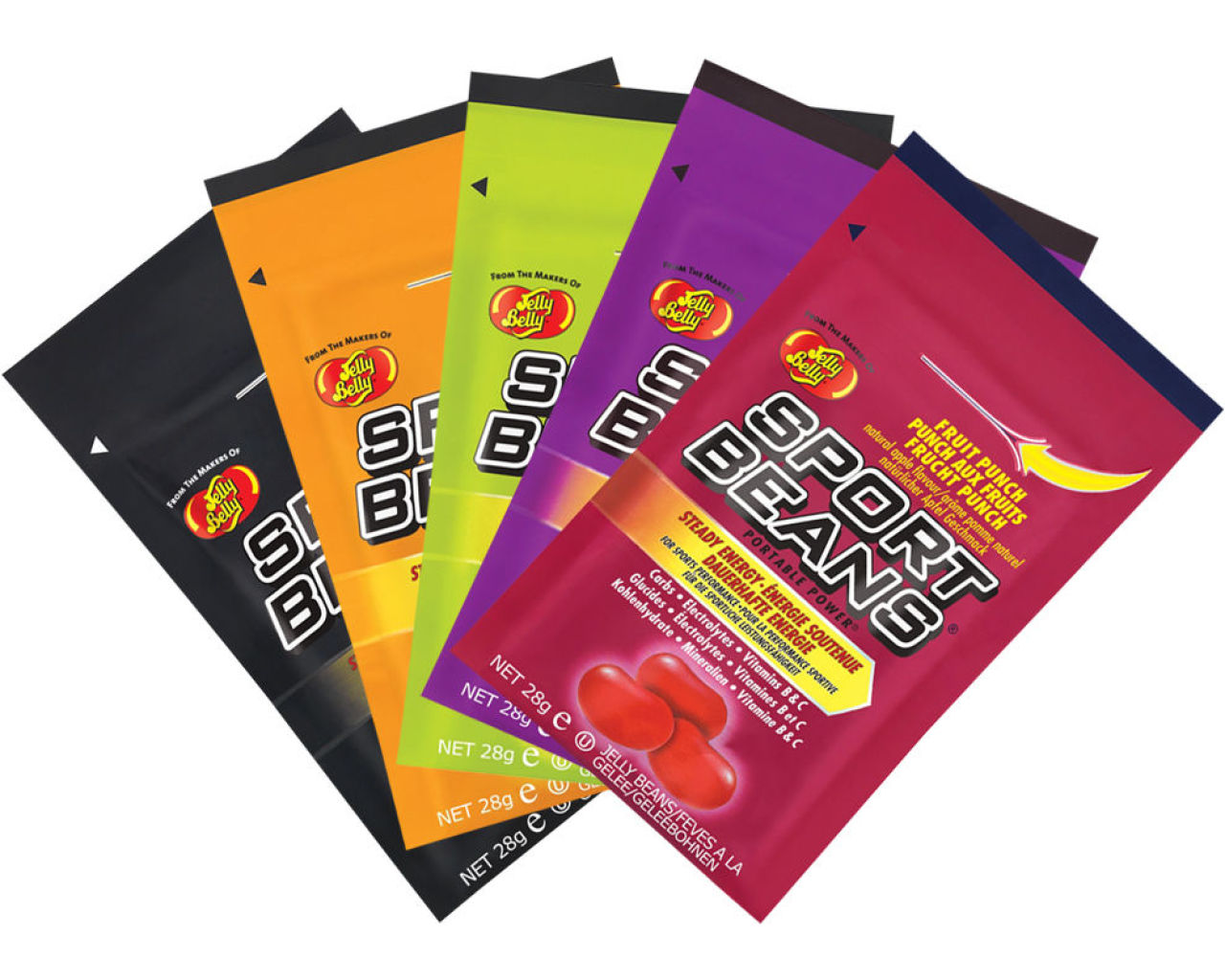
Jelly Belly Sport Beans RRP £1.99

Jelly sweets are often part of an athlete’s fueling plan, with ‘fizzy jelly snakes’ being a firm favourite in the Life of Tri household.

When out on a long ride or run, the body will crave a hit of energy, or more specifically, sugar.  In between energy gels and bars, I will often reach for something more convenient and that’s where jelly sweets are very useful.  Having a small bag of sweets on offer means I can get sugars on board quickly and easily, with a delivery of the required energy boost.

Jelly Belly have taken what they do well, the creation of tasty sweets, and developed a product that is specifically designed for the sports industry.  With the added benefit of caffeine and vitamins to aid energy release, the beans also contain potassium and sodium to give you the boost of electrolytes needed to combat muscle fatigue.

Jelly beans wouldn’t be my normal ‘go to’ for an energy fix but their Sport Beans are a convenient option to consider. They come in a small bag which contains circa 13 beans (28g) and can easily be stored in a pocket or sports bra (so I am told).  The only downside for me is that they don’t fit into a race belt (unless it has a pocket) which is my preferred storage for race day.  The pack is easy enough to open on the move and can be resealed saving you having to consume all at once.  Although small in stature, the jelly beans do contain electrolytes, with some flavours containing caffeine for that extra energy boost.

Each pack of Sport Beans contains 25g carbs, of which 76 per cent are sugars, making them ideal portable carbs to aid maintaining blood sugar levels and allowing you to exercise longer. A good thing about the beans is that they don’t contain artificial sweeteners, however they contain some E numbers which I would prefer to avoid where possible.  Each pack is designed to give you roughly an hour’s worth of energy but it doesn’t feel substantial enough for me.

Verdict

Jelly Belly’s Sport Beans are an excellent addition to any fueling strategy considering their reasonable pricing (compared to other similar products).  The added benefit of a caffeine boost and electrolytes make the beans suitable for endurance events, as long as you remember to stay hydrated when consuming (which you should be doing considering you are training/racing).  I would recommend Sport Beans to any athlete who struggles with gels.

Nutrition score per serving (13 beans): 100 calories, 25g carbs, 80mg sodium, 40mg potassium 50mg caffeine

Jelly Belly Sport Beans RRP £1.99

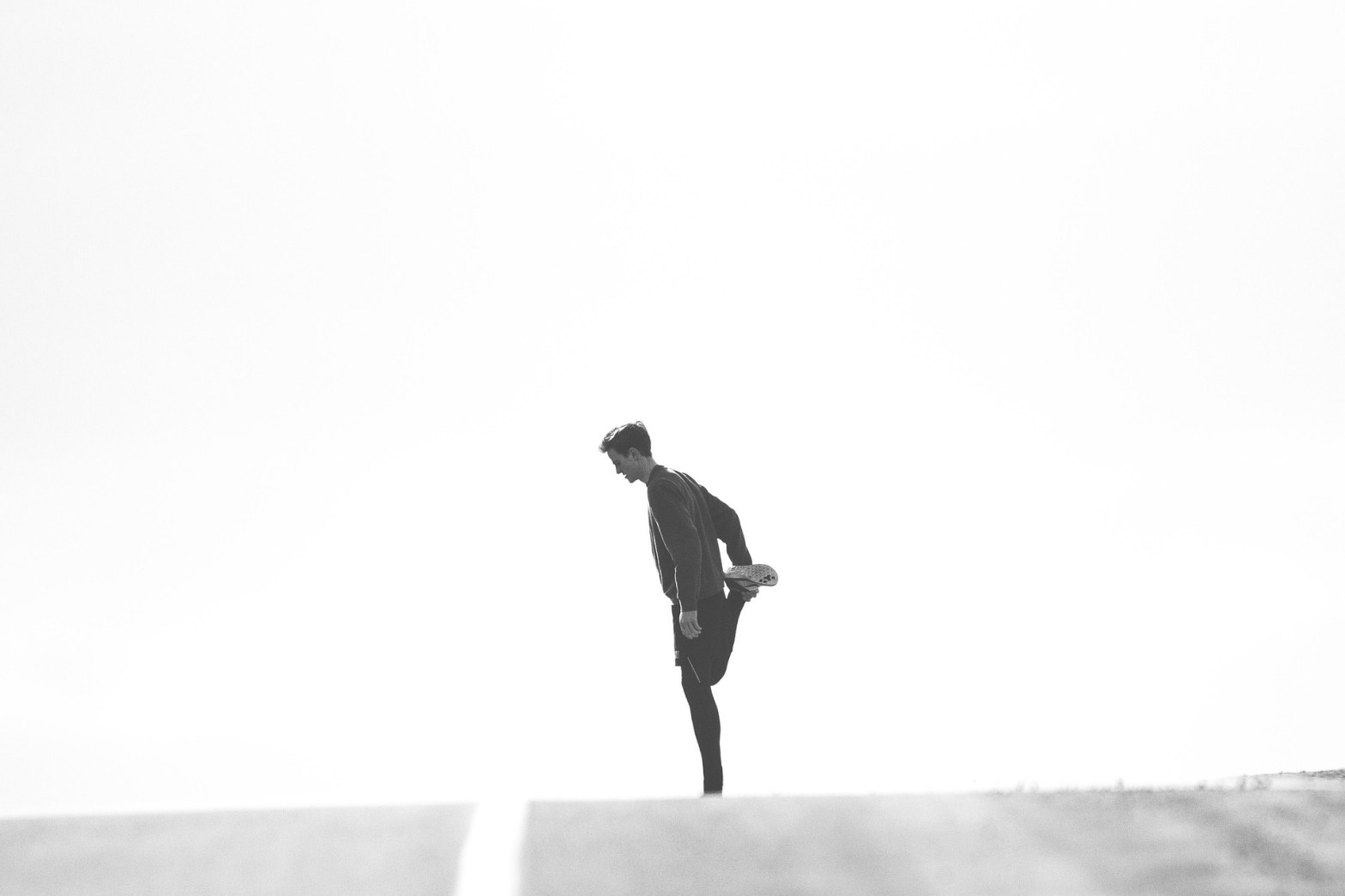
Blog: Importance of Stretching for Injury Prevention

I have always taken part in some form of sport from a very young age, and have always been encouraged to stretch before activity. Although I knew the importance of stretching, I had always found that I tended to perform a gesture of stretching, rather than fully appreciating its importance for overall health and fitness.

I was always taught to ‘warm up’ before playing team sports (football and rugby) which gave dedicated time before activity for this to take place.  Normally led by a coach or team member, we would go through the motions which normally meant only hamstrings and thigh stretches.  I know I am not alone in this gesture, with many amateur athletes not placing a lot of value on stretching. In some respects, it’s understandable because time is a precious commodity, and stretching is often the first thing to go.  Stretching is often seen as a boring metronomic task that doesn’t fit in with the often macho image of training.  You will hear people boast about their long rides or runs, but never will you hear someone say they completed a 30 min stretching workout

Whether you are in the pool, climbing a mountain on the bike or trail running, it always feels like you are achieving something that is benefiting your training.  But stretching or attending a yoga class can feel like something that aids your training, rather than training itself.

Many people will argue that stretching before activity will not prevent injury, and admittedly there has been very little scientific research to support stretching for this purpose (or discredit it).  However, stretching must be seen as more than a ‘warm up’.   It should be seen as increasing your range of movement, which will aid your ability to perform more efficiently and effectively.  Routinely lengthening a muscle can only be good for the prevention of injury.  When training, your muscles contract repeatedly which results in the connective tissue shortening and tightening.  These muscles lose elasticity through repetitive movement, which seldom go through a full range of motion because they stop short of full extension and complete flexion.  Another potential benefit of stretching is increased muscle power. Power in your muscles comes from their contraction; since power is positively affected by the length of the muscle, increasing your muscle length increases the potential power produced by its contraction. In other words, longer muscles are more powerful.

Now in my 30s and concentrating on triathlon, I will admit that I had the mindset of stretching as ‘warm up’ until a couple of years ago, where l I had a light bulb moment after picking up consecutive injuries.  I started to think of stretching as a preventative measure before, during and after activities, not just before.  I wanted to ensure that I managed my body more efficiently so gave a greater emphasis to rest and stretching, and started to view them as training sessions in their own right. 

I am still quite bad at stretching before exercise, but I do now take 10 to 20 mins each day to stretch key muscles as well as two dedicated stretch and core strength sessions.  This has helped me manage niggles more efficiently, and the issues I used to have in my calves have more of less disappeared since I regularly stretch the backs of my legs and lower back. 

My five top stretches (although consider a whole body routine) are :

  • ·         Glute Stretch (Also known as a Pretzel Stretch)
  • ·         Seated Hamstring Stretch
  • ·         Twisting Buttock Stretch
  • ·         Eccentric Calf Raises
  • ·         Cobra Stretch

Below are links to resources I use for stretching.  The videos are great because it ensures I hold the stretch and don’t cut the session short.  I am pretty sure that most people can find at least 10 mins a day to do these stretches, even if it’s as you are watching TV.

https://www.youtube.com/watch?v=CbZzeO4P9YA

https://www.youtube.com/watch?v=9iljr_dEUPY

https://www.youtube.com/watch?v=iN3sHkni1gI

Review: Oompf Energy bars

Oompf Energy Bars £1.99

Readers of the Life Of Tri website will know that we are often looking for new and wonderful ways of fuelling our long training sessions, and seeking convenient snacks we can use in races.  This week we have decided to look at Oompf Energy Bars after a colleague of mine recently used them on a long cycle.

First impressions of the bars were that they seem very appealing with a lot of thought gone into the look of packaging.  However this is of little relevance for most triathletes as we are more concerned with; how easy it is to open, what it tastes like and is there enough fuel within?

The bars do not have your traditional single layer packaging as most energy bars have.  Oompf wrap their bars with a simple and effective foil layer under a paper branded layer. These are one-hand-friendly as long as you remove the paper layer before stashing in your cycling pockets.  Supposedly this ‘easy to open’ packaging has been adopted from the pro cycling world with the foil layer simple to open especially in the saddle.

The bars are promoted as natural which isn’t a regulated term, so I was suspicious until I saw the ingredients.  I was pleasantly surprised that all ingredients were indeed natural, and especially beneficial for anyone hoping to eat ‘clean’.  According to Oompf, they ensure that only whole, natural and unprocessed ingredients are used.  The bars are free from gluten, wheat, dairy, lactose and refined sugars.  One thing to note is that Oompf bars are made to order, and are designed to be stored in the fridge where they can keep for up to four weeks, or up to three months in the freezer.

Oompf have created four flavours to choose from which include:

  • Awesome Acai
  • Cacao Charge
  • Oh So Pistachio
  • Very Berry

The bars weigh in at 55g, which is comparable to a standard size Mars bar, and calories range from 220kcal to a little over 300kcal depending on the flavour chosen.

Because of the lack of additives the bars do have a short shelf life (as mentioned above), but this does mean that they have a more ‘fresh’ feel and taste compared to other energy bars.  The bars have a moist texture, which definitely makes them more appealing, an almost fruit cake consistency.  I was a huge fan of the Pistachio which has an excellent ratio of nuts to other ingredients.  The bars are easily digested which will be kind to stomachs on long training rides.

Verdict

The energy bar sector is a highly competitive market but I believe Oompf have created a product that will appeal to many triathletes.  As mentioned, the bars are easy to stomach and the use of only natural ingredients will offer a solution to many athletes who choose ‘free from’ foods.  The only down side to the product is the short shelf life which prevents buying in bulk for a prolonged period.  However this is the trade off for the natural approach to fuelling.  I personally would use these bars as a compliment to a wider fuelling strategy.  Oompf also produce Energy Balls which are the same as the bars but come in handy bite sized portions

Oompf Energy Website

Race Review: Long Course Weekend (Wales)

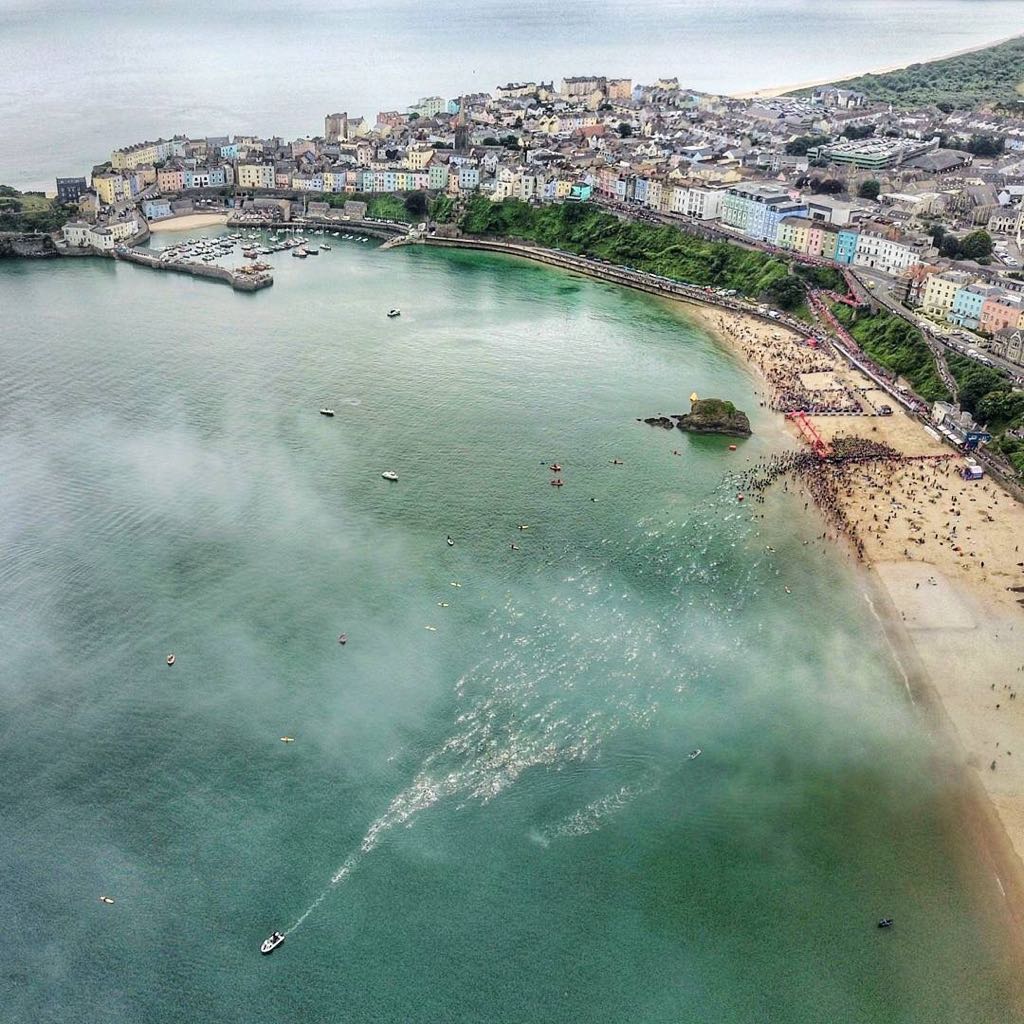
I think it is fair to say that triathlon has really exploded onto the scene in Wales since 2011 and the introduction of the first Ironman Wales event. Since then the participation levels for triathlon and the number of events have sky rocketed. One of Wales’ most popular events is the Long Course Weekend (LCW) which normally takes place in early July, and serves as an excellent introduction to long distance triathlon.  LCW is organised by Activity Wales Events who have built a great reputation for delivering swim/bike/run events to a very high standard.  The event also positions itself well in Ironman Wales training plans, being two months prior to the big event in September.  Held in Tenby, South West Wales, LCW mimics the swim and bike course of Ironman Wales (the run is a different route) so it is the perfect opportunity to recce the course in preparation.  Tenby is well versed at hosting sporting events of this size, with surrounding villages and towns adding additional facilities.

2017 will be its 7th year and although tweaked over that time, it has remained largely the same with the swim held on Friday evening, the bike on Saturday and the run on Sunday.  The local residents and businesses have really embraced the event with athletes getting discounts in many shops and restaurants across the weekend.

Originally set up to serve athletes wanting to compete in the distances offered by full distance triathlon, the event now offers shorter distances on each discipline which has made the LCW more accessible for all level of athletes. Activity Wales Events do promote each discipline as separate events which does appeal to those who do not normally partake in triathlon, the events are:

  • Wales Swim
  • Wales Sportive
  • Wales Full & Half Marathon

For each of the swim, bike and run events you will receive a medal. However, those who have signed up for the LCW receive a 4th medal upon completion, which allows all medals to connect to make one substantial medal.  The full LCW costs more than signing up for the events individually, however, this covers the cost of the additional medal, tee shirt and awards ceremony.

The Swim

As mentioned, the swim takes place on the Friday evening on Tenby’s North Beach/harbour with the sun setting in the background. Many athletes will be staying in Tenby with the event within walking distance and easily accessible; street parking and car parks are available nearby for anyone travelling in.  The swim event has two options; either one or two laps of the 1.2 mile course.  At the end of lap 1 athletes will exit the water, run up the beach before either crossing the finish line for the half distance or re-entering the water for lap 2.  As the event is a sea swim, it can be very dependent on the conditions.  When the sea is choppy the event can be very challenging and I have seen many people choose to call it a day after the first lap.

The Bike

There are three different distances for The Wales Sportive. The short distance of 45 miles, the mid of 66 miles, as well as the full distance course of 112 miles for the athletes who really want to push their limits. The event is held on open roads so riders do have to be mindful of sharing the road and obeying traffic laws. The route is well sign posted with marshals at key points on the course and well stocked aid stations. The 112 mile option is the same course as the Ironman Wales bike leg, with 1 big loop returning to Tenby, before setting off on a smaller second loop again returning to Tenby for the finish. Athletes on the 112 mile option set off in waves quite early on the Saturday morning, while the shorter courses take in elements of the 112 mile course and set off at later times.  The first part of the 112 mile course takes you out to Pembroke/Angle, this section can be fast and athletes often push it not realising that the rest is very challenging with its hills. The hills are not mountainous but can be steep in parts and come thick and fast.

The Run

The run is held on the Sunday and has expanded its distances over the years. As well as offering a marathon and half marathon, there are also 5k and 10k options.) With a red carpet finish, and a packed Tenby town centre, the finish line is an unbelievable experience. All the run options are held on a closed road route but be warned – none are flat! The marathon starts in Tenby at the reasonable time of 10am and is an out and back loop. The half marathon starts at Pembroke Castle at 12pm and joins for the second 13.1 miles of the marathon. The marathon course is very challenging with one big climb during the first half and 4 decent climbs in the second half. The section down to Manorbier and back out again is brutal for both marathon and half marathon, but the views are spectacular. Feed and water stations are situated roughly every 5 miles along the route and are a welcome opportunity to take in fluid especially if the weather is warm.

Verdict: If you want a festival of swim, bike and run then the Long Course Weekend is for you. The whole event consisting of the three disciplines is well organised by Activity Wales Events. The LCW is often thought of a precursor to Ironman Wales but to be honest the event holds its own. Pembrokeshire, especially Tenby is extremely welcoming and the location is beautiful. I will definitely be returning.

The Long Course Weekend series has also been extended to events in Jervis Bay (Australia) and Mallorca (Spain) in recent years.  Although a trip to Australia may be out of my budget, I would love to experience LCW Mallorca in the coming years.

www.longcourseweekend.com


Blog: Swimming Up Stream

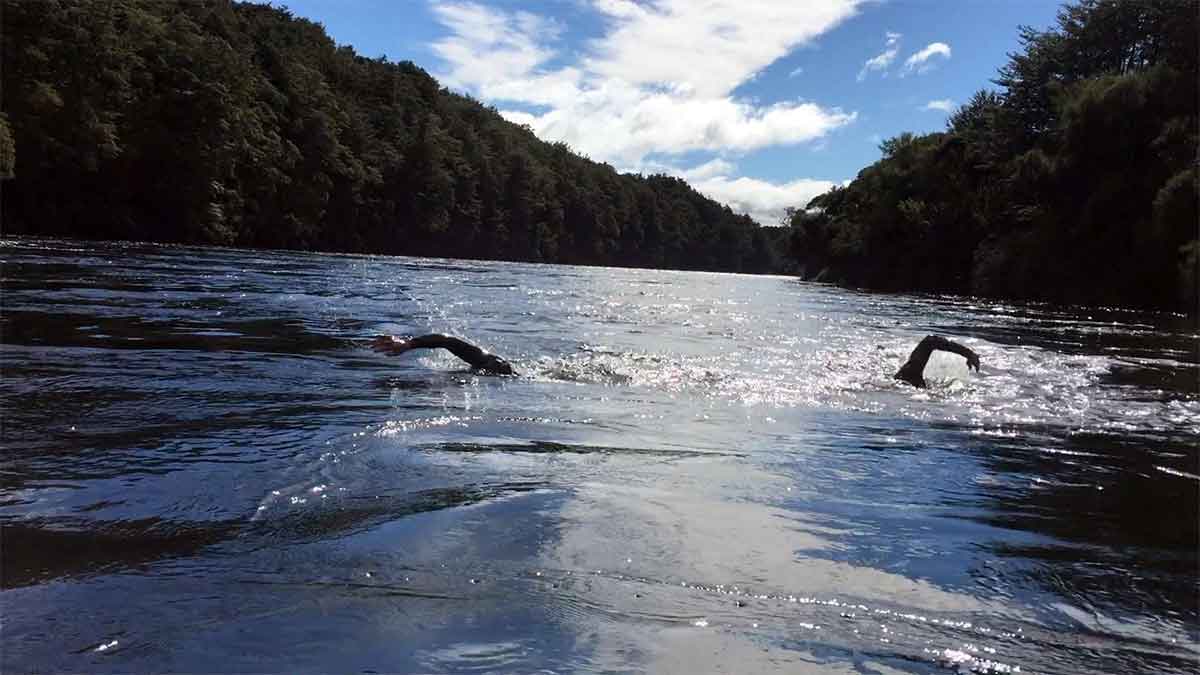
For those of you that know me and follow my triathlon antics, you will know that during the spring and summer months, I not only take my cycling and running outdoors but also my swimming.  Yes, I am one of these mad types that will use the local river in Cardiff (the River Taff) as part of my swim training and I’m not ashamed to admit that I absolutely love it.  I do think you have to be a little bonkers to partake in triathlon, especially longer distance, so the fact I swim in the local river surely isn’t going to be that much of a surprise, is it?

The benefits of outdoor swimming are far reaching, and apart from being free and easily accessible there are a number of health and psychological benefits.  Cold immersion soothes muscle aches, can boosts the immune system, while having a positive impact on mental health.  It’s not often that I reference NASA in my blog but NASA studies have shown that, over a 12-week period, repeated cold swimming leads to substantial bodily changes known as ‘cold adaptation’.   This leads to a reduction in blood pressure and cholesterol, and an increase in fertility and libido in both men and women.

Whenever I tell people about river swimming, I am normally met with the same responses of ‘isn’t it dirty’ or ‘won’t you catch something’?  Our local rivers and lakes are cleaner today than at any time in living memory.  I used to work for an environmental charity and researched river swimming extensively before I started.  Industrial and agricultural pollution did negatively impact our rivers in the 1960s but the 1974 Control of Pollution Act and subsequent European legislation has been successful in turning around the health and cleanliness of our waterways.  Environment bodies (Environment Agency in England & NRW in Wales) monitor the health of all our waterways with over 70 per cent of the rivers achieving very good or good on a water quality scale.

According to the Environment Agency “Most people’s first concern is usually sewage but with the European Water Framework Directive all effluent now undergoes at least two treatments before entering a river and, increasingly, a third to make it completely sterile and pure”.  Any bacterium that remains are quickly killed by the sun’s UV rays, or consumed in the micro-food chain of the river.  So in theory the further down river you are the cleaner the water will become.

The biggest challenge you face in a river is the current. Not only is there the resistance upstream, but its strength is constantly changing depending on weather.   People often assume it is the current weather that affects the river level and current, but it is hours later when the rainfall has come down stream when people get caught out.  Understanding your local river is vital to swimming safe.  If in doubt speak to your local outdoor swimming club and/or gather information before attempting to enter any stretch of river. 

 I will normally swim with other ‘mad’ folk from the running and triathlon clubs I am associated with on a ½ mile of river which has no sharp turns or obstacles.  You will be surprised how many cycling or running clubs have splinter divisions that dabble in triathlon.  99% of the time I will swim in a wetsuit which gives extra buoyancy, so if anyone gets into trouble they can roll onto their back, floating for a rest or make their way to the water’s edge.  

Once you leave the comfort of the pool, river swimming will give you an opportunity to practice sighting for forthcoming races, and gives you training that mimics race conditions more than the pool ever will.   If new to sighting, practice regular sight-breathing by looking up every 8-10 strokes, and gradually working up to 20.

Each stretch of river is different and will challenge you in very different ways. Positioning on the river is vital to getting the most out of your training session. If you took a cross-section of a river, you would see it is shallower near the banks before deepening in the middle.  Deeper water equals faster water so you would get a harder workout when swimming upstream than using the shallower areas.

The equipment needed for river swimming isn’t an extensive as you may think, I use the following:

·         Wetsuit

·         Swimming Cap (because the water can get cold)

·         Ear plugs (personal preference)

·         A waterproof holder for car key or a swimming buoy/bag

I will admit the hardest thing is getting in the water and allowing water into your wetsuit, followed by the cold water on your face.  Ensure you allow time to acclimatise yourself to the temperature before you start swimming.

In short, outdoor swim can be a fantastic element to your training, however it needs to be planned and athletes need to respect the water.  If in doubt look for a local group or club.  If anyone has any further questions please email me on lifeoftri@yahoo.com or leave a comment.

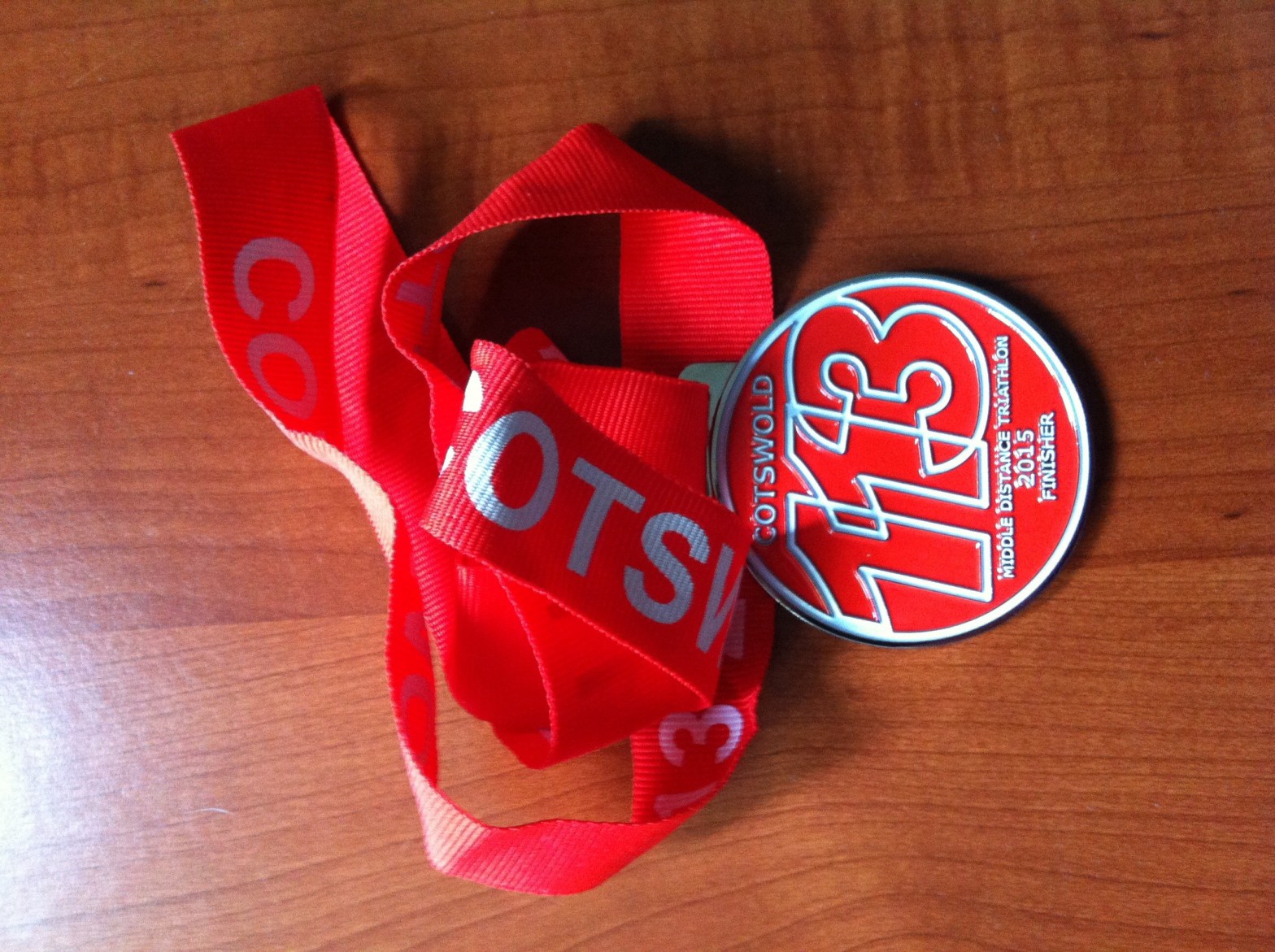
Race Review: Cotswold 113

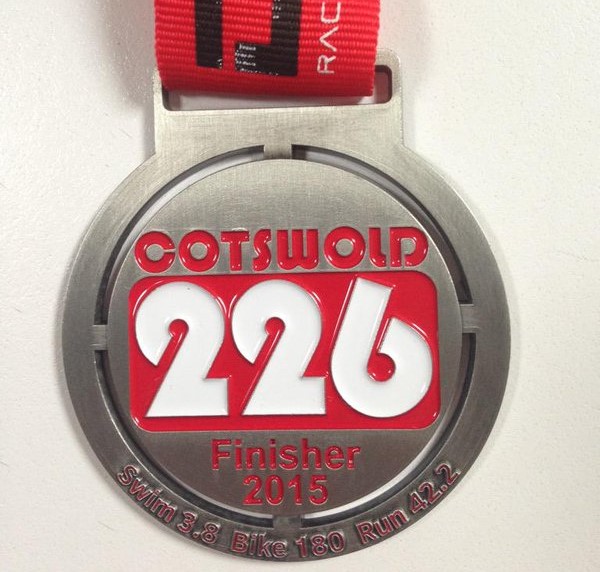
The Cotswold 113 has been running for a number of years now and is definitely a firm favourite amongst triathletes partly due to its flat fast course. Set in the Heart of the picturesque Cotswolds, race HQ is situated at the well known Lake 32 in the centre of Ashton Keynes water park.  The race is run by DB Max who is an established event organiser, running a number of events along the M4 corridor (see my review of the Brecon Titan).  DB Max also hosts two other large triathlons from the same location during other times of the year, including the Cotswold 226 (full distance) and Cotswold Classic which is basically the same race as the 113 but held a couple of months later.

The Cotswold 113 is run over middle distance with a 1.9 mile swim, circa 56 mile bike ride and a half marathon (13.1 miles) run.  There is often some debate over the distance of the bike leg as it normally comes in shorter than 56 miles, but is still within acceptable parameters.  The event can also be entered as a relay of 3 ensuring the race is accessible by a larger audience, if weaker in one particular discipline.

Registration for the event is normally the day before which can cause some headache if coming from afar, but friends and family are able to collect the race pack for you with authorisation.  Registration is open between 12 and 5pm with a small expo of companies there promoting their wares.  I have done the event a couple of times and always stay near Swindon in one of the hotels on the M4.  From the M4, the water park is roughly 20mins away, there are hotels and camping facilities closer to race HQ for those not wanting to commute too far on the morning.  Ultimately the Cotswolds are renowned for its tourism so finding accommodation is never difficult if you are well prepared.

On the day of the race, transition is open from 4.00am with the car park opening 30 minutes prior to that.  There is plenty of parking but get there early if you want a prime spot so you can shuffle back to your car after the race.  There is a cost for parking which in previous years was £5 but in 2017 this did increase to £10 due to new owners of the land where the car park is.  DB Max is hopeful of reducing this in the future or finding alternative parking.  There is parking for spectators coming in additional vehicles, and probably at a later time, which is roughly a 10 min walk away from the start/finish and transition (cost £3).

Since the race has an early start of 6am, transition closes at 5.45am with the first race briefing at 5.50am.  The race is set off in waves with 10 minutes between each group, giving time for the group in front to clear and the race organiser to brief the next wave.  In previous years there has been up to 8 waves, and the organisers will try to accommodate you if you want to race with friends and club members. 

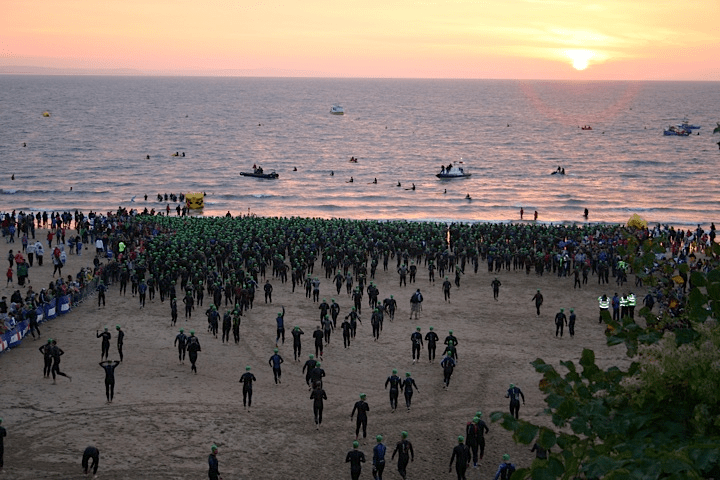
As mentioned the swim takes please in Lake 32 and is a one lap swim going anticlockwise.  As the wave numbers are low you don’t get the jostling you normally find at a mass start.  Depending on the weather in the weeks leading up to the event, the water level and temperature can vary.  In 2015 we almost had a wetsuit ban and the water level was low due to warm weather.  The exit of the swim is slippery but there are marshals there to help you get out of the water and up the banking.  The transition area is on grass so your feet don’t take a hammering running to your bike which is probably less than 25 meters away.

The bike leg consists of a flat 2 lap course with one small hill (120ft climb) which isn’t anything to worry about (even though I saw people pushing their bikes up it).  The course is on closed roads with a couple of nasty sharp turns and one narrow section with restricted overtaking, but these are well sign posted and the marshals are normally superb telling you what is coming up.  There are two aid stations on the course at roughly 25 and 50 miles offering an array of liquid and solid fuel.

This is a very fast course which I averaged 21/22mph on, bearing in mind cycling is definitely my weakest discipline.  Entry back into transition is a simple affair with the run course setting you off around the lake.  The 3 lap run course is a mixture of surfaces but mainly off road/trail and totally flat.  It can be slippery in parts if wet so you need to watch your footing, and I do wonder if athletes would benefit from trail trainers.  Something to consider if the weather conditions are wet.

You run past the finish line twice before the final sprint (maybe shuffle) on the 3rd lap with plenty of support along this stretch.  The good thing is that transition is close to the finish so collecting your gear afterwards is straight forward.

Verdict:  I personally think this is a fantastic race and well organised.  You have to be disciplined to ensure you leave something for the run as the temptation is to go hell for leather on the bike.  I have done this race twice before and will be returning to try and break the 5hr barrier.

DB MAX Cotswold 113 website

Race Report: Brecon Titan Middle Distance Triathlon

The Brecon Titan Triathlon has been running for a few years now and is well established in the race calendar for triathletes in South Wales.  The triathlon is run by DB Max Events who also organise the Cotswold 113, Classic and 226, demonstrating their experience of running large events which is evident with the Titan.  In 2016, DB Max also introduced another Titan race, at Weston Super Mare, so it’s important to note that this review details the Brecon Titan race only.    The race is run over middle distance (1.2mile Swim, 60 mile Bike and 13.1 mile Run), with the swim and run hosted at Parc Bryn Bach in Tredegar, and the bike route taking in the Brecon Beacons National Park.  This region highlights some of the most stunning locations in South Wales but do not come to the event expecting a flat route and an easy ride.  Parc Bryn Bach is situated at the heads of the South Wales Valleys, and although picturesque is flanked by hills and woodland. 

The swim takes place in the 36 acre lake at Parc Bryn Bach which is close to the car parks and visitor’s centre.  Transition is right beside the lake and it is a short run (50m) from the water’s edge; this is mainly over grass until you get to the hard standing of the transition area.  There are toilets in the visitor’s centre for any last-minute nerves with HQ situated in the same building.  I collected my race pack the night before because I live local to South Wales, but I’m sure there would be no issue collecting this on the morning of the race.  The race started at 7.00am, which meant I hit no traffic travelling up from Cardiff, with little to no queueing for the car parks. 

A wetsuit is needed for the swim and it is advisable to acclimatise yourself with the water beforehand, if anything to get used to the reeds when you first enter the water.  The Swim is a two lap course of the lake around the island situated in the middle.  It is a mass start but athlete numbers at the event are low so there isn’t the normal pandemonium found at events such as Ironman Wales.

Once out of the water and through transition you skirt the northern towns of the South Wales Valleys before heading north into the Brecon Beacons National Park.  The 60-mile bike course could be classed as ‘epic’ because it does get quite hilly in points.  Part of the course takes in quiet country roads near to Brecon before heading towards Sennybridge and re-joining the same route back.  Then at roughly 45/50 miles you climb Llangynidr Mountain; which is a 3-mile slog that zaps your legs before the run.  Get this wrong and say goodbye to any energy for the run.

Getting back into transition is a straight forward affair before you set off on the 3 lap half marathon around the lake and park.  This element is superb for spectators as they can see you on the course multiple times with very little walking in between.  Just when you thought the hills were left behind on the bike, you run around the lake only to be confronted by more hills to run up.

The run course is challenging but aid stations are well placed and couldn’t come quickly enough for me.  Refreshments at the aid stations are varied and as usual the volunteers are fantastic.

If you really wanted to challenge yourself, or are training for a difficult Ironman race, then you won’t go wrong with The Brecon Titan.  I struggled on the bike and I think left my legs half way up Llangynidr Mountain which really affected my run.  Although thoroughly difficult, I loved this race, which was helped by good weather.  I would imagine if the weather wasn’t great, this would make a difficult race even harder, but most triathletes are bonkers enough to probably still enjoy it.

Verdict: for anyone training for Ironman Wales, sign up now.  For anyone wanting a flat course, try the Cotswold 113.

Brecon Titan Website

Blog: Ironman Come Down

I am still on reduced training due to a heel injury, mainly concentrating on low impact training which basically means no running. So for this week’s blog I have decided to talk about my second year competing in triathlon, and the come down I had after my first Ironman.  After a year of training and preparation races, I did Ironman Wales in September 2014.  I was over the moon with the fact I had completed the race and I even managed to stay up to watch the last finisher at midnight.

Then Monday came.  I woke up with the expected sore body and an Ironman shuffle, knowing that we had booked the holiday house in Tenby for the rest of that week.  I should have been looking forward to my week of rest, but surprisingly I felt a void, as my main focus for the last 12 months had now disappeared.  This feeling wasn’t helped by the fact that as Tenby is known as a seaside resort, scores of triathletes were packing up their cars to leave, only to be replaced by coach upon coach of pensioners, like a scene from a Carry On film.

I walked around Tenby that morning, noticing Ironman Wales athletes in their finisher tee shirts, giving each other a nod of appreciation, but wondering to myself “what next?” 

I did allow myself a week of rest, and I will admit I probably ate my way through enough ice cream to keep local businesses in trade until the next Ironman event, but I still had that nagging thought at the back of my mind of what should I do next?  Do I look for another challenge in another sport/activity or do I want to stick with triathlon?

I know people who completed an event like Ironman, only to hang up their trisuit and retire.  They are happy with their accomplishment, but never want to swim, bike and run again.  It’s the challenge of achieving something as bonkers as Ironman that is their end goal.   I, on the other hand, was torn.  I had invested so much time, effort and resource into my tri journey, I felt I had unfinished business, but I was physically and mentally knackered.   I took a couple of months to think over what I wanted to do, but I always knew that I had a taste for triathlon and I wanted more. 

Between September and December 2014 I didn’t really have any training focus, which really frustrated me.  There was no structure to my weekly routine because I wasn’t really training for anything, and the winter months always proved difficult to get me motivated anyway.  It wasn’t until the New Year that I finally decided to take action; I would concentrate on races up to middle distance, competing some of the more challenging courses local to South Wales and South West England.

That decision was the push I needed.  Within a month, I was back into a structured training plan and had the sign off for a new bike J.  I had also registered for DB Max’s Titan Brecon middle distance which is renowned for being a challenging course, so I had a focus and more importantly I had a date to structure my training around.  I had also signed up for a few sportives, ½ marathons and an aquathon which equated to roughly an event a month taking me up to August 2015. 

The events started in March with the Llanelli half marathon and a personal best of 1hr:35min; each month ticking off another race and learning more and more each time.  A regular race structure for the season definitely works for me, enabling me to build the distance as the year goes on, and ensuring that I don’t lose focus.

Then September 2015 came, it was the end of my race season and I went to support Ironman Wales again.  We camped ourselves in Saunderfoot on ‘Heartbreak Hill’ and spent the morning cheering the bike leg before moving to support the run leg.  The support Ironman Wales receives from the crowd is phenomenal and the experience of being on ‘Heartbreak Hill’ was all I needed to plant a seed of competing at iron distance again.

Within 24 hours I had signed up for the following year’s Ironman Wales.

The training cycle then started again, but this time I had focus for 12 months and the rest, as they say, is history.  I completed Ironman Wales 2016 and took 1hr 40mins off my previous time, putting that mainly down to being more experienced with how to train and how to race.

I seem to be in two year cycles so roll on 2018 and another Ironman event………..

Race Review: Cotswold 226

Race Review by Triathlon Matt

YouTube – Triathlon Matt         Twitter – @triathlonmatt

As a finisher of the inaugural 2014 Cotswold 226 iron distance triathlon I was over the moon when I heard the news that there would be a weekend option.   Set in the heart of the beautiful Cotswolds, the 226 offers a great iron distance event. A swim at the fantastic Lake 32 in the Cotswold Water Park, a fast and scenic 56 mile bike course, followed by a part trail run course around the lake.

For the weekend option you can choose to do the swim event on the Saturday, the bike course on Sunday or, like me, both!

The swim took place at 4pm in the afternoon and the conditions were great. Lake 32 was, as usual, clear and clean to swim in. The course is 1.2 miles and you can choose to do one or two laps for the full or half iron swim distance. I opted for the 2 lap 2.4 miler. Lining up against the other swimmers had the feel that the Cotswold 226 is famous for. Friendly, encouraging and inspiring sums up the outlook of most of the competitors that you will meet.

After the swim briefing the starters whistle went and everybody just seemed to find ‘their patch of water’. Such a welcome swim start in comparison to some of the water based boxing matches you can encounter.

The course was well marked with large yellow buoys. Sighting was fine and there were always enough feet to follow too! While you’re not going to get much marshal support on a swim a note has to go to the support crew at the water exit. Big cheers and an even bigger help out of the water was waiting for us. Times were available instantly once you’d finish and the all important event medal polished off that awesome post iron swim feeling.

Next up it was the sportive style bike on Sunday. I arrived at the car park early to watch the swim start of the main triathlon. Once the triathlon is underway you could choose to start the Cotswold 226 bike sportive between 6.30am and 7.30am. The start is the same course entry point that the triathlon uses so feels very much a part of the epic event.

Once off, the course is well signed and road surfaces were mainly smooth. The usual chip timing takes care of your time result, which works perfectly as it lets you choose your distance on the fly. You can stop after one 56 mile lap or carry on for the second depending how you feel at the time.

The bike route is also very scenic. There are some great little villages on route. Make sure you look out for the traditional red telephone box and thatch roofs around half way. On the journey you’re also well supported by the feed stations. I don’t know how the organisers do it but the Cotswold 226 always attracts such awesome marshals. Stopping for a banana, fresh water bottle and energy bar / gel is a pleasure when it’s served up by such smiley encouraging people.

There were a few undulations to get out of the saddle for yet nothing near proper climbing territory. If you want to perfect your aero bar speed position over a long distance this is the course to test it out on.

Being part of the main triathlon was also really inspiring. The sportive riders get red numbers and the triathlon participants black numbers. I really enjoyed giving the triathlon guys and gals as much encouragement as I could to help them with their amazing challenge.

As a stand alone event the bike sportive was fun and recommended. As a longer distance triathlon training event it’s a must, and also a perfect introduction for the iron distance novice. If you’re not sure if you could tackle the main Cotswold 226 I’d definitely recommend giving the weekend option a go. You’d be surprised at how inspiring the whole event is.

Without that many miles in my legs I did the one lap bike option. Picking up my second medal of the weekend still had me feeling a real part of the achievements taking place. As a previous Cotswold 226 triathlon finisher the weekend event is also the perfect way to continue participating in this great event without having to do the huge volumes of training.

The Cotswold 226 is a must do for me each year, regarding of which one of it’s options I do. I’ll hope to see you on the start line in the future.

Cotswold 226 website

Race Review: Cardiff Triathlon

Race Review by Simon Roxburgh

www.Triroxtraining.co.uk

A closed road Olympic Distance Triathlon on the streets of the Welsh capital city, is an opportunity too good to miss. Now in its third year, Always Aim High Events have produced a slick, well managed athlete focussed race in a truly iconic venue. This is a chance to get the city centre racing experience that you pay big money for through your National Age Group Team, but without the qualification/ roll down process and having to buy team kit. It’s a special kind of race.

Riding the mile from my hotel near Bute Dock down to Cardiff Bay I was refreshed by a fine drizzle and a stiff south westerly breeze, today was going to be fun.

Transition is in Roald Dahl Plass, an amphitheatre immediately adjacent to the Wales Millennium Centre and fronting on to the waterfront of Cardiff Bay. It’s a pretty impressive place for a transition area, feels secure and is great for spectators.

After a fitful nights sleep with regular wake up calls from my drunken neighbours at The Big Sleep Hotel meant I was pretty jaded by the time I got there and proceeded to rack in the wrong spot for the first time in 12 years, despite clear numbering on the racking. In the words of Homer Simpson, doh!

The swim is pretty straight forward and coming in a little short of 1500m (according to my Garmin anyway), it’s going to help give some flattering swim times, all being well. It’s a deep water start, adjacent to the Dr Who Experience (at this point I would of been glad of some time travel help – I’m not being greedy, just a chance to knock 10 minutes of my overall time would be great), from the gun to the first buoy is approximately 500m heading directly towards Northcliffe/Penarth, the south westerly means there is a good chop on the water coming mainly head on but slightly to the right, although The Bay is a river water lagoon, the wind creates little dumpy waves that make the opening leg hard work. A right turn for 100m then another right sees the homeward leg to Transition. The red brick tower on the Pier Building makes a good initial sighting point, before the flags and blue carpet of the exit pontoon become fully into view.

Running into transition, you get a good buzz off the noise from the crowds, there is a good deal of space between racks so I find my bike quickly and out onto the bike course.

I’m not going to lie; this is a proper city centre course, with plenty of twists, turns and athletes. If you’re expecting a proper time triallist drag strip, you’re not going to get it. What you will get is a fairly technical, yet very flat course that still offers some very fast sections as well as couple of dead turns, so best brush up on your bike handling skills. That being said, I still think that a TT bike is the better option over a road bike with clip ons if you have the option. The strong winds actually made the bike leg really interesting, particularly with how they swirl around buildings and the man made topography of the city streets. Knowing when to push on but also realising when the wind is slowing progress yet you’re still working hard enough despite this, took some concentration.  Additionally the damp road surface meant that extra concentration was needed cornering, it’s worth losing a minute and staying upright rather than pushing the limits and sliding out.

After three 13km laps transition beckoned again, bike racked, helmet off and run out towards the waters edge.

The run is flat and fast, consisting of two 5km laps. Heading out of transition you turn left onto Harbour Drive, past the swim start and onto Tiger Way, here the course scenery breaks from the polished Cardiff Bay experience that tourists soak in, to glimpses of the industrial past of the docks as you pass the industrial units of Cargo Way. This then leads onto the barrage where you have the fresh water of Cardiff Bay on one side and the brine of the Bristol Channel on the other.

Approximately 2.5km there’s a dead turn and back the way you came, as you head back into the polished parts of The Bay, rather than head left back into transition you bear right in front of the steps of The Senedd (the home of the Welsh Assembly – here I could add a quip about it not being the first time that loads of hot air has been blown around The Senedd building but I’m bigger than that) before turning around for the second lap.

The second lap is more of the same and it’s great to see where you stand against your team mates and the athletes you’ve been having little one to one battles with as you run back out to the barrage. Finally as you head back past The Senedd, you’re directed past the turnaround point, onto Stuart Street before after what seems an age (in reality 30 seconds) you hit the final turn left to the finish arch next to Roald Dahl Plass and the Millennium Centre.

In summary, if you want a fantastically organised event with some great city centre racing around some iconic landmarks of Welsh life, choose the Cardiff Triathlon, it’s a must do event.

Cardiff Triathlon website

A big thank you to Sport Picture Cymru for allowing us to use the picture

Triathlon coaching available via www.Triroxtraining.co.uk